
A search for art schools in Michigan can point to two very different decisions. One person may be choosing a college, preparing for a creative career and deciding where to invest four years. Another may be an adult who wants to learn oil painting after work, or a parent looking for serious instruction that goes beyond quick craft projects. Both people call what they want an “art school,” but they are not shopping for the same thing.
Most articles answer only the college question. This guide starts by covering Michigan’s degree-granting options, then examines the studio path for adults, working people and younger artists. Whichever route fits you, the most important questions remain surprisingly practical: Who will teach you? How much individual attention will you receive? Does the instruction build from one skill to the next? Will you work from life? Can you consistently attend?
Two Different Questions Wearing the Same Words
If you need an accredited degree, access to a university campus, academic credits and the wider college experience, you should focus on degree-granting institutions. Look carefully at each program’s curriculum, facilities, faculty, financial aid, student support and career resources. International students will also need to investigate admissions requirements, visa support and housing through each school’s official channels.
If you want an adult art school in Michigan because your goal is to draw or paint well, a degree may not be necessary. You may need a working studio, an experienced instructor and one dependable evening each week. That distinction is not about which path is more serious. It is about whether you are purchasing a credential, developing a skill, or trying to do both.
Michigan’s Degree Programs, Briefly and Fairly
Search results for the “best art schools in Michigan” often turn into rankings, but rankings can hide the decision you actually need to make. One school may emphasize art and design within a specialized college environment, while another offers studio study inside a large university. The right choice depends on the kind of artwork you want to make, the education and credential you need, and the environment in which you are most likely to thrive.
Michigan has several established options across undergraduate, graduate and pre-college education. This is not a ranking. It is a starting point for researching institutions whose formats and student experiences differ substantially.
College for Creative Studies is a private art and design college in Detroit. Its specialized setting may appeal to students who want their college experience centered on creative fields and surrounded by other emerging artists and designers.
The Penny W. Stamps School of Art & Design is the University of Michigan’s art and design school in Ann Arbor. Students study within a major research university, with access to the broader academic and campus community that comes with that setting.
Cranbrook Academy of Art in Bloomfield Hills is a graduate-only institution focused on advanced study in art, architecture and design. That detail matters because it is sometimes included on general school lists without making clear that it is not an undergraduate BFA option.
Eastern Michigan University’s School of Art & Design in Ypsilanti offers art and design education within a public university. Prospective students should review its current program descriptions, faculty work and degree requirements directly rather than relying on a third-party summary.
Wayne State University’s James Pearson Duffy Department of Art, Art History, and Design provides studio art and related study in Detroit. Its urban university setting gives students a different kind of campus experience and connection to the city’s cultural community.
Interlochen Arts Academy belongs to a separate category. It is an arts boarding high school in Interlochen, making it relevant to secondary-school students seeking an immersive arts education before college.
These institutions differ in size, setting and emphasis, but they share a basic structure. They award credentials, follow academic calendars and are designed around substantial academic commitments. Applicants should read the current curriculum, visit when possible, review faculty artwork and speak with admissions teams before forming an opinion.
The Other Path: Studio-Based Art Training
A college is not the only place where serious art education happens. In an atelier or community studio model, students take ongoing classes in a working studio without pursuing a degree. The purpose is direct skill development: learning to observe accurately, draw convincingly, understand value, mix color and handle paint with greater control.
This path suits adults who want to paint well but do not need a qualification. It also works for people with jobs or families who cannot step away from daily life for a full-time program, teenagers developing stronger skills alongside school, and artists returning after a gap of ten or twenty years. People searching for “art classes Michigan” are often looking for exactly this, even if they initially call it an art school.
Studio study can also complement formal education. A teenager may receive broad creative opportunities at school while using outside instruction to strengthen observational drawing or painting. Students preparing applications can learn more about building a portfolio for college art admissions without replacing their regular academic education.
The degree path and studio path are not rivals. A studio can prepare a student for college, support an artist during or after a degree, or provide lifelong education for someone who never wants a credential. The useful question is not, “Which one is more legitimate?” It is, “Which structure serves what I want to do next?”
What Actually Predicts Whether You Learn
Choosing an art school becomes easier when you stop asking which name sounds most impressive and start asking what will happen during an ordinary class. Imagine a rainy Tuesday in February, not an open house with polished displays. Who is in the room? What are you working on? Does the instructor have enough time to look carefully at your work?
The answers below are useful whether you are evaluating a university program, a private studio or a local art institute. A beautiful campus and impressive events calendar can enrich the experience, but learning still occurs through repeated practice, clear feedback and sustained attention.
Who Is Actually Teaching, and Are They Working Artists?
Look for named instructors whose artwork you can see. A title alone tells you little about how someone draws, paints or teaches. Faculty and studio pages should help you understand an instructor’s field, experience and artistic practice. When possible, ask who teaches introductory students rather than assuming the most visible professor or artist leads every class.
Being a skilled artist does not automatically make someone a skilled teacher, but active practice matters. A painter who regularly solves problems involving proportion, edges, value and color can demonstrate those decisions in concrete terms. The strongest instructors can both make the work and explain what they are seeing without taking the brush out of the student’s hand.
How Many Students Are in the Room?
Class size changes the education. In a room of ten students, an instructor can usually observe each person’s process, catch a drawing error early and return later to see whether the correction worked. In a room of thirty, individual feedback may be shorter, less frequent or partly delivered through group critiques.
Neither format is automatically wrong. Lectures and large critiques can expose students to a diverse range of ideas and artwork. Skill-based studio instruction, however, depends heavily on close observation and timely correction. Ask for a typical class size, not only the maximum number listed in a catalog.
Is the Training Sequential or a Series of Unrelated Projects?
There is a difference between making five interesting objects and developing one durable ability. Sequential instruction builds deliberately: drawing before detail, value before color, simple forms before complex subjects, then edges, temperature and paint handling. Each stage supports the next, much like learning scales before attempting a difficult piece of music.
Standalone workshops can be enjoyable and useful, especially when you want to explore a new material or subject. They are less effective as the sole foundation for steady development. Ask whether students follow a curriculum that builds from one skill to the next or simply join a new project each week.
Do Students Work From Life?
Drawing or painting from life forces the eye to make decisions. You must translate a three-dimensional subject into shapes, proportions, values and edges while light changes and your own viewpoint affects what you see. A photograph has already flattened many of those relationships for you.
Photographs remain useful references, and many accomplished artists use them. They should not be the only source of visual information during foundational training. Ask how often a program includes still life, portrait, figure or other direct observation, and explore why drawing from life develops skills that copying a screen cannot fully replace.
Can You Actually Attend It?
This is the least glamorous criterion and one of the most decisive. A superb class that meets while you are at work, requires an exhausting drive or repeatedly conflicts with family responsibilities will not help you improve. Skill grows through accumulated hours, not through the good intentions you had when registering.
Compare the schedule with your real week before falling in love with a program. Check travel time, parking, makeup policies, materials preparation and the amount of work expected outside class. For a degree, consider whether you can sustain the academic load and campus commitment. For an evening studio, ask whether the class time can become a dependable part of your life.
What Art Education Costs, Honestly
A four-year degree and a weekly studio class are fundamentally different purchases. Degree costs may include tuition, fees, supplies, housing, transportation and lost working time. Residency status and financial aid can change the final amount considerably, so use each college or university’s current published tuition and aid information rather than a number copied into an article that may soon be outdated.
Studio instruction is usually a smaller and more flexible commitment. Students commonly pay by the class, session or month, without purchasing academic credits or a credential. That makes it easier to fit training around work and family life, although supplies, model fees and materials plans may add to the total.
For a concrete example, Atelier School of Art’s standard tuition is about $286 every four weeks for most ongoing classes. The rate is about $247 with membership. An individual annual membership is $255, while a household membership is $355, with both providing 15 percent off classes and workshops during the membership period.
Those figures illustrate the studio model rather than create a direct comparison with college tuition. One purchase provides recurring instruction; the other includes a larger academic and credentialing structure. Our guide to how much art classes cost in Royal Oak offers a fuller breakdown of class pricing, supplies and related expenses.
Where Atelier School of Art Fits
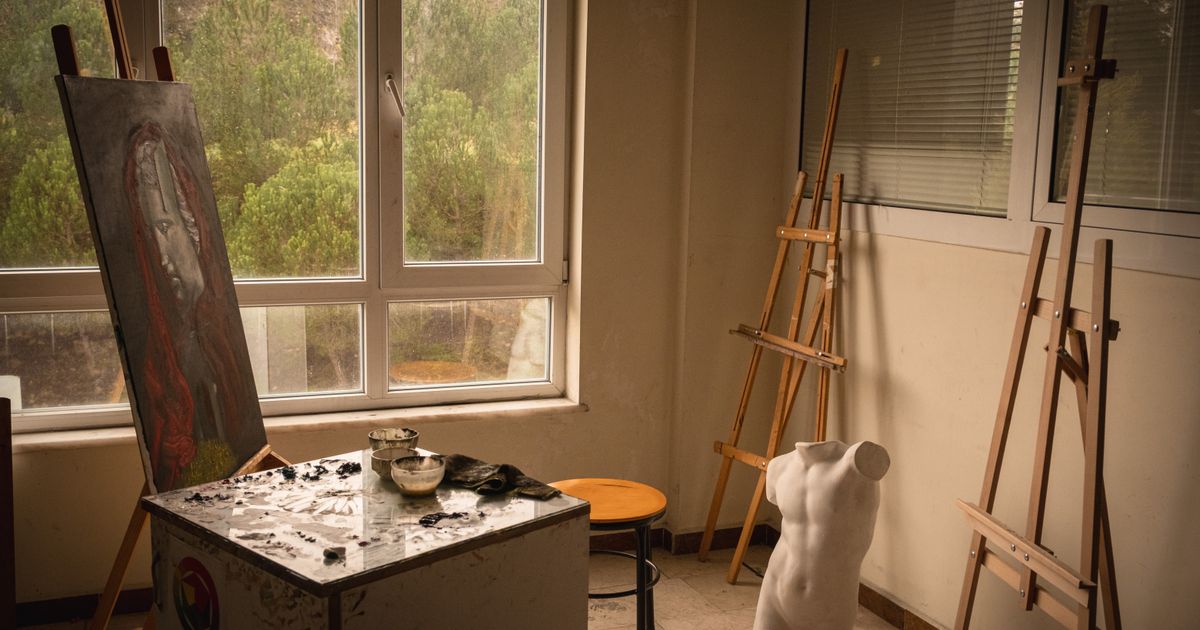
Atelier School of Art is not a degree-granting program, and it does not pretend to be one. It is a working studio focused on classical oil painting and drawing for adults, along with youth studio, middle school and teen instruction. Classes are kept to around ten students so instructors can provide individual guidance rather than relying only on demonstrations delivered to the whole room.
Founder and director Todd Burroughs brings more than twenty-five years in the arts to the school. Students can explore ongoing art classes at 407 E 4th St in Royal Oak or learn about the school’s Novi art class location. The studios serve students from across metro Detroit, including Birmingham, Rochester Hills and Novi.
Enrollment is open year round, with new students typically beginning during the first week of a month. Prospective students can also tour the studio or call (248) 951-4400 with questions before enrolling. That gives you a chance to see the room, understand the teaching format and decide whether the schedule fits your week.
Most importantly, ask Atelier the same questions you would ask any other school. Who will teach me? How large is the class? Does the training build sequentially? Will I work from life? Can I attend consistently? Those questions will tell you more than a ranked list because they reveal what your education will look like once the brochure is closed and the real work begins.